DL4YHF / QSO Labs, PIC frecuency Counter Mini
author: CX5AA
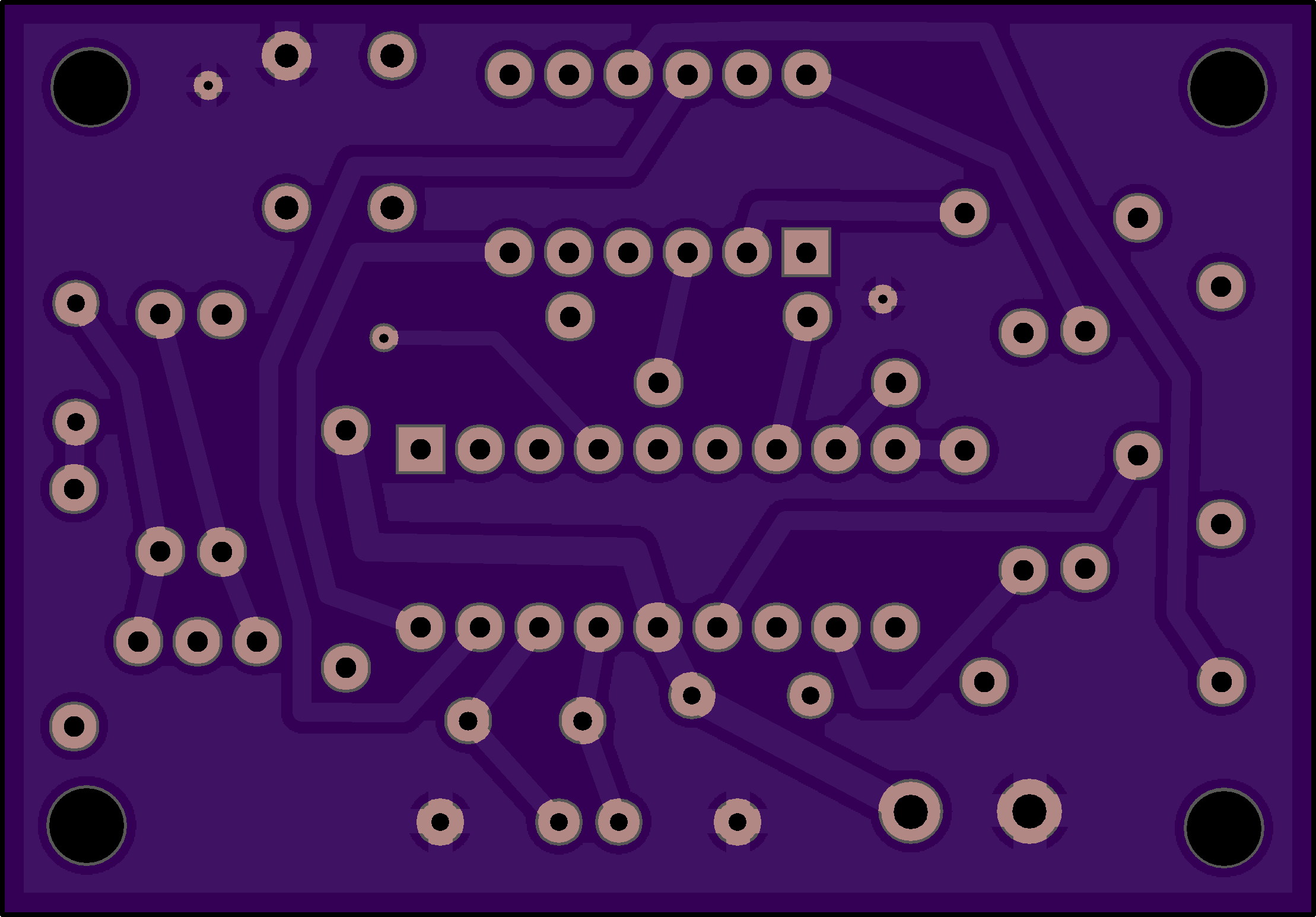
2 layer board of 2.21 x 1.54 inches (56.2 x 39.1 mm)
Uploaded:
March 06, 2023
Shared:
March 06, 2023
Total Price:
$17.00
DL4YHF frecuency counter assembly
DL4YHF 4 digit frequency counter.
The frequency counter designed by Wolfgang “Wolf” Büschel (DL4YHF) is a compact, low-cost instrument built around a PIC16F628 microcontroller and a simple LED display. With minimal hardware—just a handful of resistors, a crystal, and optional transistors—it can measure signals from 1 Hz up to 50 MHz, making it suitable for amateur radio and electronics hobbyists.
Its features include automatic range switching, programmable frequency offsets for use with transceivers, and an optional preamplifier to boost weak signals. The display offers four or five digits of resolution, with firmware variants supporting both common-cathode and common-anode LED modules. Builders can adapt the design to breadboard or PCB layouts, keeping the project flexible and accessible.
Beyond its technical merits, the counter embodies the DIY ethos of amateur radio. The firmware and schematics are freely available, encouraging experimentation and modifications. Over the years, enthusiasts worldwide have created improved versions, proving that this simple yet powerful tool continues to inspire innovation in the homebrew community.
El contador de frecuencias desarrollado por Wolfgang “Wolf” Büschel (DL4YHF) es un instrumento compacto y económico basado en el microcontrolador PIC16F628 y un sencillo display LED. Con muy pocos componentes—resistencias, un cristal y algunos transistores opcionales—permite medir señales desde 1 Hz hasta 50 MHz, ideal para radioaficionados y aficionados a la electrónica.
Entre sus características se destacan el cambio automático de rango, la posibilidad de programar offsets de frecuencia para transceptores y un preamplificador opcional para señales débiles. La visualización alcanza cuatro o cinco dígitos de resolución, con variantes de firmware que soportan módulos LED de cátodo común o ánodo común. El diseño puede montarse tanto en protoboard como en PCB, lo que lo hace versátil y accesible.
Más allá de lo técnico, este contador refleja el espíritu “hazlo tú mismo” del radioaficionado. Los planos y el firmware están disponibles libremente, fomentando la experimentación y las mejoras. Con el tiempo, numerosos entusiastas han creado variantes y optimizaciones, demostrando que este proyecto sencillo sigue inspirando innovación en la comunidad de construcción casera.
DL4YHF frecuency counter assembly
DL4YHF 4 digit frequency counter.
The frequency counter designed by Wolfgang “Wolf” Büschel (DL4YHF) is a compact, low-cost instrument built around a PIC16F628 microcontroller and a simple LED display. With minimal hardware—just a handful of resistors, a crystal, and optional transistors—it can measure signals from 1 Hz up to 50 MHz, making it suitable for amateur radio and electronics hobbyists.
Its features include automatic range switching, programmable frequency offsets for use with transceivers, and an optional preamplifier to boost weak signals. The display offers four or five digits of resolution, with firmware variants supporting both common-cathode and common-anode LED modules. Builders can adapt the design to breadboard or PCB layouts, keeping the project flexible and accessible.
Beyond its technical merits, the counter embodies the DIY ethos of amateur radio. The firmware and schematics are freely available, encouraging experimentation and modifications. Over the years, enthusiasts worldwide have created improved versions, proving that this simple yet powerful tool continues to inspire innovation in the homebrew community.
El contador de frecuencias desarrollado por Wolfgang “Wolf” Büschel (DL4YHF) es un instrumento compacto y económico basado en el microcontrolador PIC16F628 y un sencillo display LED. Con muy pocos componentes—resistencias, un cristal y algunos transistores opcionales—permite medir señales desde 1 Hz hasta 50 MHz, ideal para radioaficionados y aficionados a la electrónica.
Entre sus características se destacan el cambio automático de rango, la posibilidad de programar offsets de frecuencia para transceptores y un preamplificador opcional para señales débiles. La visualización alcanza cuatro o cinco dígitos de resolución, con variantes de firmware que soportan módulos LED de cátodo común o ánodo común. El diseño puede montarse tanto en protoboard como en PCB, lo que lo hace versátil y accesible.
Más allá de lo técnico, este contador refleja el espíritu “hazlo tú mismo” del radioaficionado. Los planos y el firmware están disponibles libremente, fomentando la experimentación y las mejoras. Con el tiempo, numerosos entusiastas han creado variantes y optimizaciones, demostrando que este proyecto sencillo sigue inspirando innovación en la comunidad de construcción casera.
